HUNT’S HOUSE HUMILIATION: REEVES UNLEASHES A FISCAL FIRESTORM IN THE COMMONS
The House of Commons has witnessed many bruising encounters, but few in recent memory matched the sheer ferocity of the moment when Rachel Reeves rose at the despatch box and tore into Jeremy Hunt’s economic record with a speech that felt less like opposition scrutiny and more like a full-scale indictment.
From her opening line, the tone was unmistakable. This was not a routine budget response. This was a reckoning.
Reeves accused the Chancellor of presiding over “thirteen years of economic failure”, branding his twin budgets as nothing more than a “huge handout to the richest one percent” while the rest of the country struggles under the weight of stagnant wages, soaring bills, and collapsing public services. Her words landed like blows, each sentence sharpened for maximum damage.
Around her, MPs heckled, groaned, and shouted. But Reeves did not flinch.

“A Catastrophe Covered Up”
At the heart of her attack was a single, devastating charge: that Jeremy Hunt had knowingly concealed the true state of the economy.
“This Chancellor covered up the catastrophe,” Reeves declared, accusing him of selling false hope to struggling families while quietly protecting those already insulated from hardship. She pointed to roads never built, hospitals left untreated, and public services stretched beyond breaking point, arguing that the damage was no accident but the predictable result of years of political choices.
Her message was clear: this was not mismanagement — it was neglect dressed up as prudence.
The National Insurance “Mirage”
One of the sharpest moments came when Reeves dismantled Hunt’s flagship National Insurance proposals. What the Chancellor had promoted as relief for working people, Reeves reframed as a deceptive sleight of hand.
She branded the plan an “8p tax rise in disguise”, arguing that the merging and restructuring of National Insurance would ultimately cost ordinary workers more while being sold as reform. According to Reeves, it was emblematic of a government that “cuts with one hand and claws back with the other.”
The accusation struck a nerve. Government benches erupted, but the damage was done. The phrase “tax mirage” quickly spread beyond the chamber, dominating political commentary within hours.
Growth Forecasts Under Fire
Reeves reserved particular scorn for the Chancellor’s growth projections, dismissing them as “fantasy economics” detached from the lived reality of millions.
She pointed to independent forecasts showing weak productivity, falling investment, and the worst living-standards squeeze since records began. Britain, she argued, was not on the brink of recovery but trapped in a cycle of low growth and high insecurity.
“Families don’t feel richer,” she said. “They feel poorer, more anxious, and more exposed than ever.”
The implication was brutal: Hunt’s optimism was not just misplaced — it was misleading.
A Government Out of Time
Beyond the numbers, Reeves’ speech carried a deeper political charge. She portrayed a government exhausted by its own contradictions, out of ideas and out of credibility, clinging to slogans while the foundations crumble.
She accused the Conservatives of governing for a narrow slice of society while leaving the rest to absorb the consequences — frozen thresholds, stealth taxes, and public services hollowed out by years of underinvestment.
“This is what failure looks like,” Reeves said. “Not one bad budget, but a pattern — year after year, choice after choice.”
Hunt’s Silent Struggle
Jeremy Hunt, for his part, sat stony-faced as the barrage continued. When he eventually rose to respond, his defence sounded procedural by comparison — focused on technicalities, global pressures, and inherited challenges.
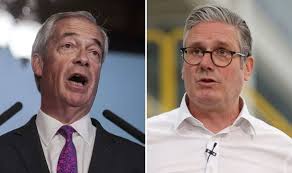
But the contrast was stark.
Where Reeves spoke in moral terms — fairness, honesty, responsibility — Hunt leaned on fiscal caution and continuity. To supporters, it was steadiness. To critics, it felt like evasion.
Even some Conservative MPs appeared uneasy, aware that the narrative Reeves was building was not about one Chancellor, but an era.
A Speech That May Linger
Whether one agrees with Reeves or not, few could deny the impact of the moment. This was not a soundbite crafted for the evening news; it was a speech designed to define a political choice.
On one side, Reeves argued, a Britain where growth benefits the few and decline is managed with spin. On the other, the promise — still untested — of a different economic direction.
As MPs filed out and commentators rushed to frame the fallout, one thing was clear: this exchange will be replayed often in the months ahead.

Because in politics, moments matter. And on this day, at the despatch box, Rachel Reeves didn’t just challenge a budget.
She put an entire record on trial.
