Fernando Alonso’s remark about imagining Formula 1 without Max Verstappen ignited an immediate storm across the paddock. His words cut sharply through the usual diplomatic tone of driver interviews. He suggested that the sport would be calmer, less penalized, but undeniably more boring without the Dutch prodigy dominating it.
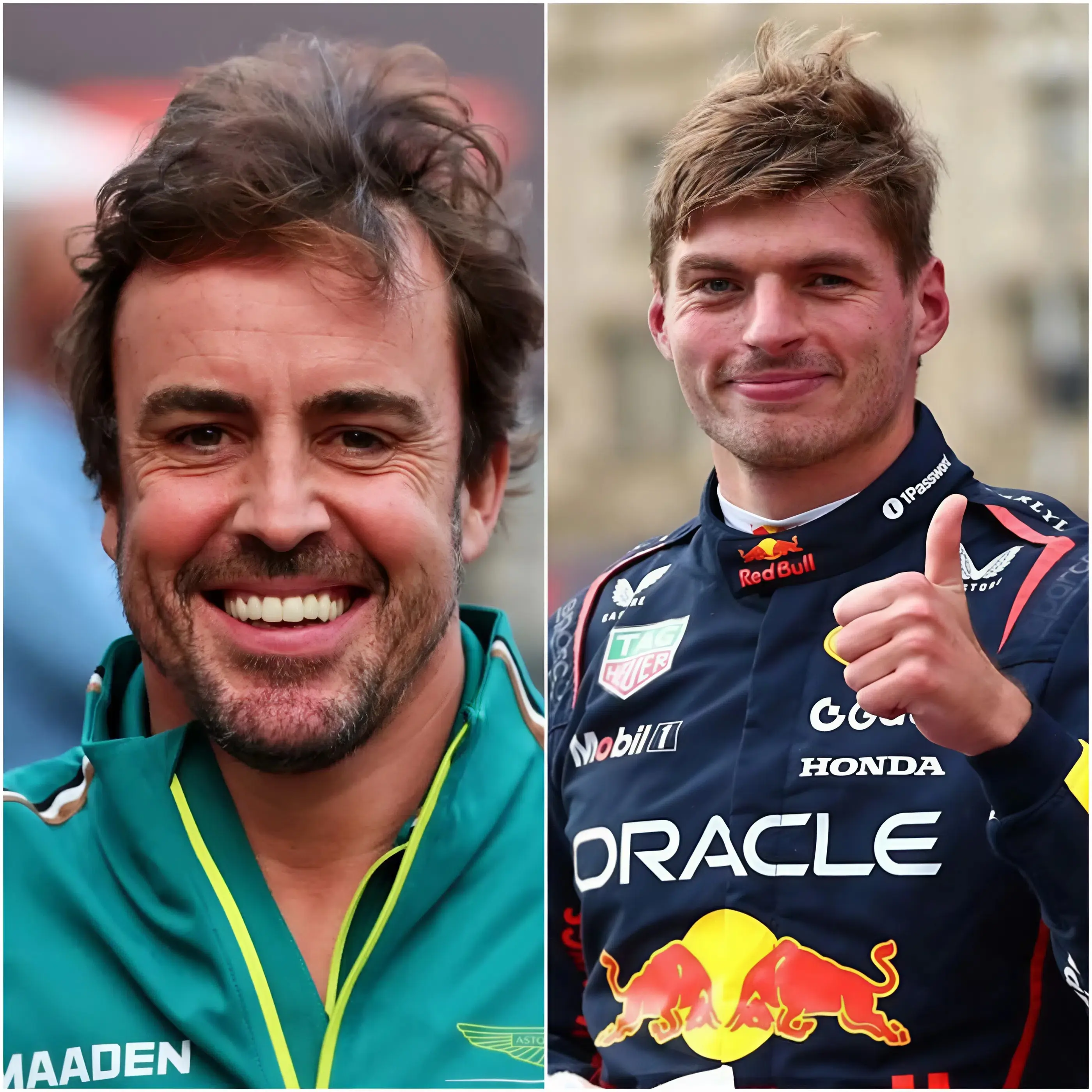
Many fans felt Alonso was simply stating what others secretly believed. Max has reshaped modern racing with ruthless efficiency, aggressive racecraft, and controversial wheel-to-wheel decisions. Without him, the championship fights of recent seasons would have looked drastically different, perhaps even depressingly predictable for neutral viewers.
Alonso’s statement carried an undertone of admiration wrapped in provocation. He implied that chaos and brilliance often come from the same source. Verstappen, in his view, embodied the blend of raw talent and uncontrollable edges that make Formula 1 captivating instead of mechanically predictable.
Critics quickly accused Alonso of glorifying dangerous driving. They argued that praising Verstappen’s volatile style sends the wrong message to younger racers. They claimed the sport already struggles with inconsistent stewarding, and celebrating the driver who generates so many investigations only perpetuates the problem.
Supporters countered by pointing out that Formula 1 has always been defined by characters who push too far. From Senna to Schumacher to Hamilton, the legends never tiptoed around conflict. Verstappen continues that lineage. Removing him would sanitize the sport into a polite procession, they insisted.
What struck many analysts was Alonso’s choice of words: “less penalties, almost certainly.” This subtle jab targeted not only Verstappen but also the FIA. It implied their rule-making and penalty system had evolved around a single driver’s aggressive presence on the track, creating endless controversy.
Some insiders suggested Alonso’s comment was a calculated psychological strategy. As a veteran, he understands how narrative pressure affects young champions. By proclaiming Verstappen essential to excitement, he may be subtly encouraging rivals to adopt riskier styles, destabilizing Max’s strategic comfort zone.
Verstappen’s fanbase erupted with applause online. They saw Alonso—one of the most respected drivers—publicly acknowledging Max’s greatness. To them, it validated their belief that Verstappen is not just dominant but historically significant, even if his presence makes headlines for the wrong reasons.
However, rival fanbases strongly disagreed. They argued Verstappen’s reign created an era of predictability disguised as excitement. His overwhelming advantage, they claimed, stripped the sport of genuine competition, replacing tension with inevitability. Alonso’s comment, they said, ignored the frustration of watching the same winner repeatedly.
Neutral observers noted the irony: Alonso praised Max for preventing boredom while also admitting the sport would be calmer without him. It raised the question of whether chaos and entertainment are interchangeable in Formula 1’s modern era. Fans debate whether they want purity or spectacle.
Some interpreted Alonso’s remark as a subtle lament about wasted potential in the field. He implied that without Verstappen overshadowing everyone, more drivers could shine, but the sport might lose its dramatic unpredictability. It was both a compliment and a criticism woven together.
Paddock commentators speculated that Alonso was also critiquing teams. If the field were more balanced and other drivers had equal machinery, Verstappen alone wouldn’t define the spectacle. The boredom, they argued, comes from technical disparities, not from Max’s existence.
The FIA refrained from officially responding, but insiders admitted the organization privately disliked being referenced indirectly in such heated statements. They feared Alonso’s comment would renew accusations of inconsistency, favoritism, or overregulation among fans and media.
Team principals treated the statement diplomatically, but off the record, some acknowledged its truth. Verstappen forces competitors to take risks they would never consider against ordinary drivers. His pace destabilizes race strategies, creating unpredictable patterns that draw viewers in.
What made the controversy grow was the timing. Alonso spoke during a season when Verstappen seemed unbeatable again. Many suspected the quote was meant to spark debate about whether the sport should adjust rules to prevent long-term dominance, as it had done historically with Schumacher and Mercedes.
Younger drivers expressed mixed reactions. Some admired Verstappen and agreed the sport needed his disruptive energy. Others felt overshadowed and believed Formula 1 could thrive with a more balanced cast of winners. The divide highlighted a generational shift in how drivers interpret racing culture.
Social media amplified everything. Clips of the quote spread across TikTok, sparking millions of comments. Memes portrayed Alonso as both a philosopher and an agent of chaos. The drama overshadowed race previews, proving the fascination with personalities often exceeds the cars themselves.
Amid the uproar, Verstappen himself responded calmly. He said being called “one of the greatest” by Alonso was an honor, even if it came wrapped in controversy. His composed reaction fueled another wave of debate about whether he had matured beyond his earlier fiery persona.
Alonso later clarified he did not intend to insult anyone. He insisted he was speaking about the emotional energy Verstappen brings to racing. Yet the ambiguity of his phrasing kept the conversation alive, fueling speculation about deeper tensions in the paddock.
Some journalists argued Alonso intentionally created a narrative that keeps interest high during predictable championship periods. They claimed seasoned drivers often make provocative comments to preserve the entertainment value of the sport when on-track drama is lacking.

Meanwhile, sponsors quietly celebrated. Every controversial quote generates attention metrics, brand impressions, and audience engagement. For commercial partners, the Alonso-Verstappen storyline was a marketing gift, proving once again that controversy drives viewership as much as technical innovation.
As debates raged, historians of the sport weighed in. They argued Alonso’s insight mirrored a long pattern: eras dominated by extraordinary individuals often seem tedious yet define legendary chapters. Removing such figures would indeed create calmness but also erase the tension that cements legacies.
Fans eventually returned to the central question: Is Formula 1 better with or without a polarizing superstar? Alonso suggested greatness comes with noise, conflict, and imperfection. And perhaps that is why his comment resonated so deeply, provoking far more than a simple media storm.
Even weeks later, the paddock still felt the ripple. Alonso’s words lingered like a challenge to the entire system. Whether meant as compliment, criticism, or provocation, they exposed a truth many were reluctant to admit: Formula 1’s most controversial figure might also be its most irreplaceable.
